CATEGORY: STILL IMAGE
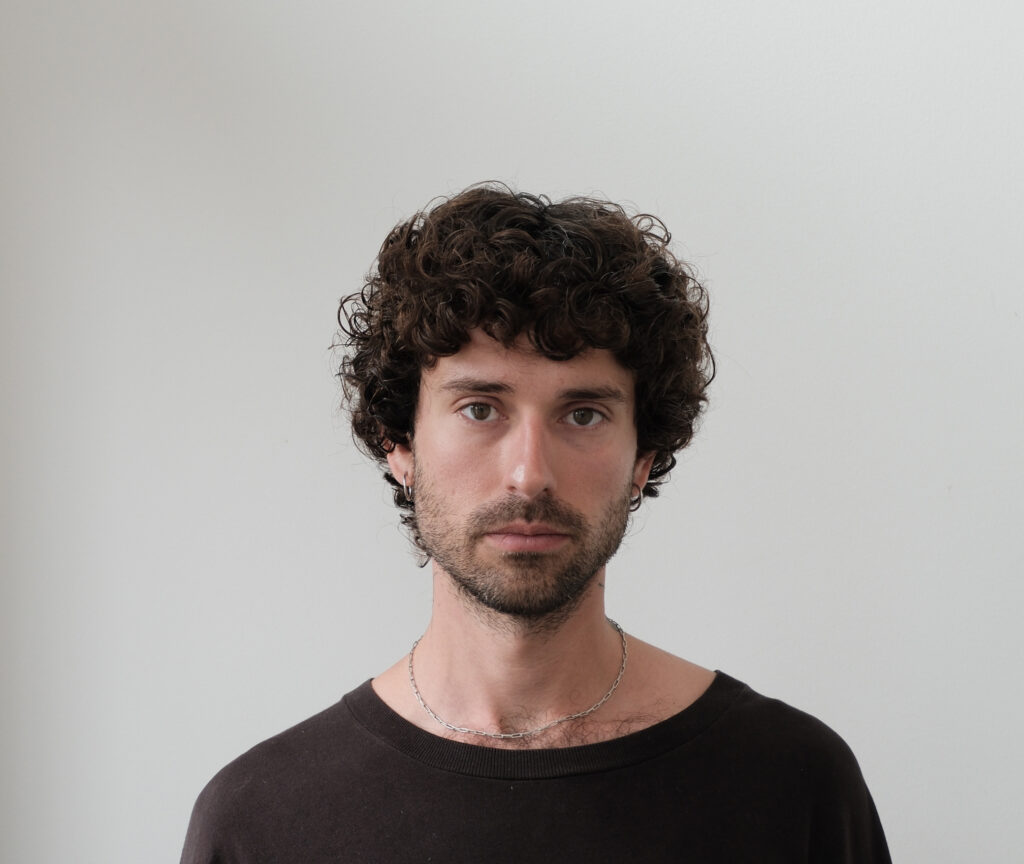
Eva Grant
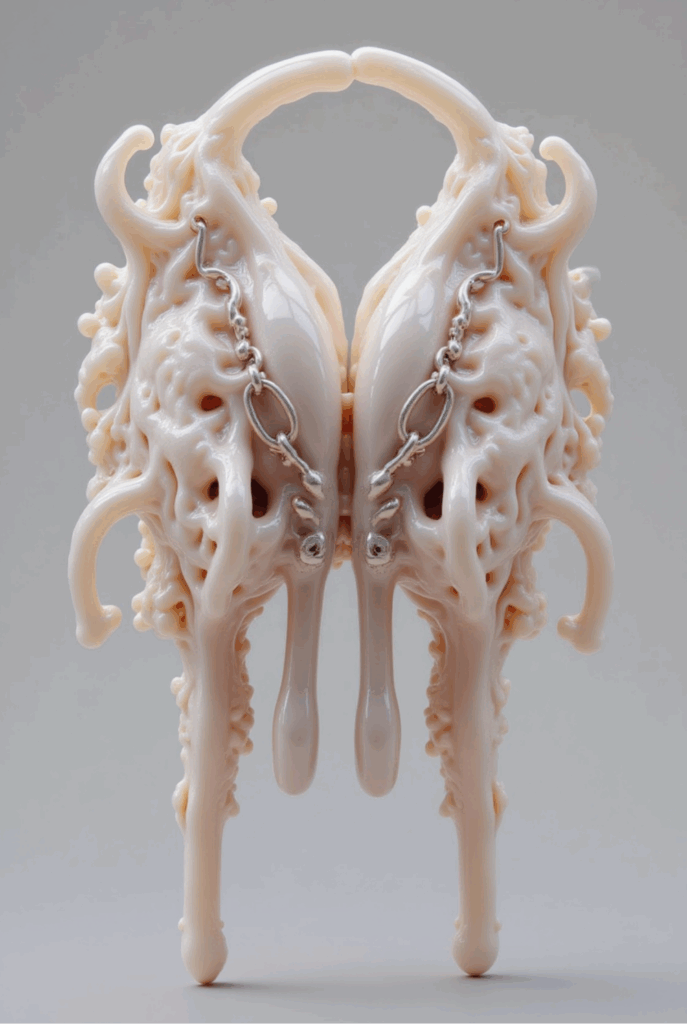
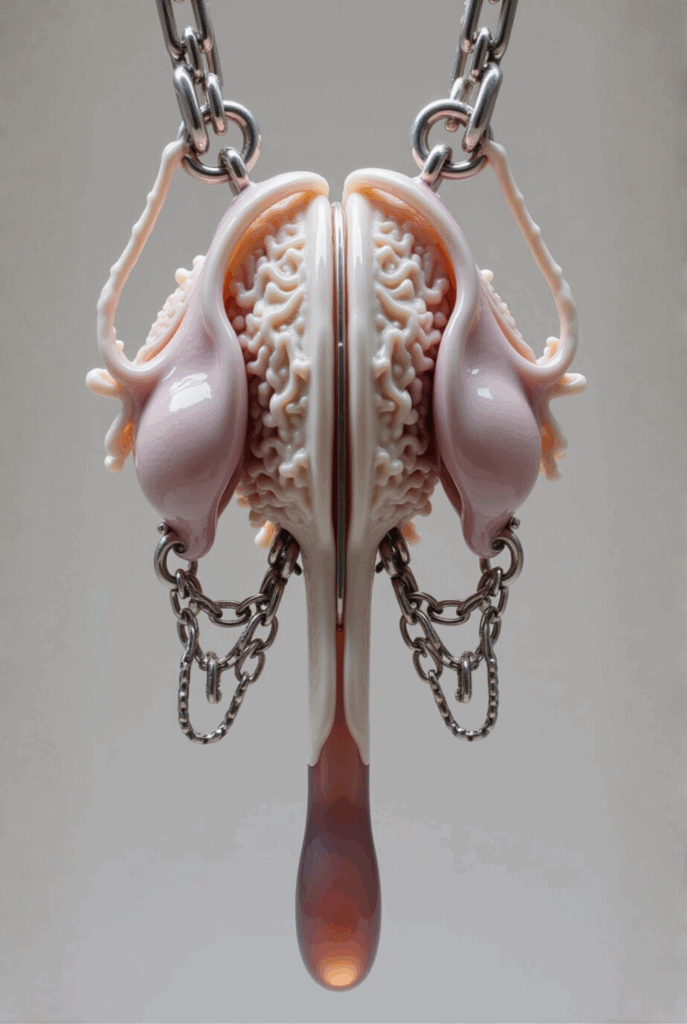
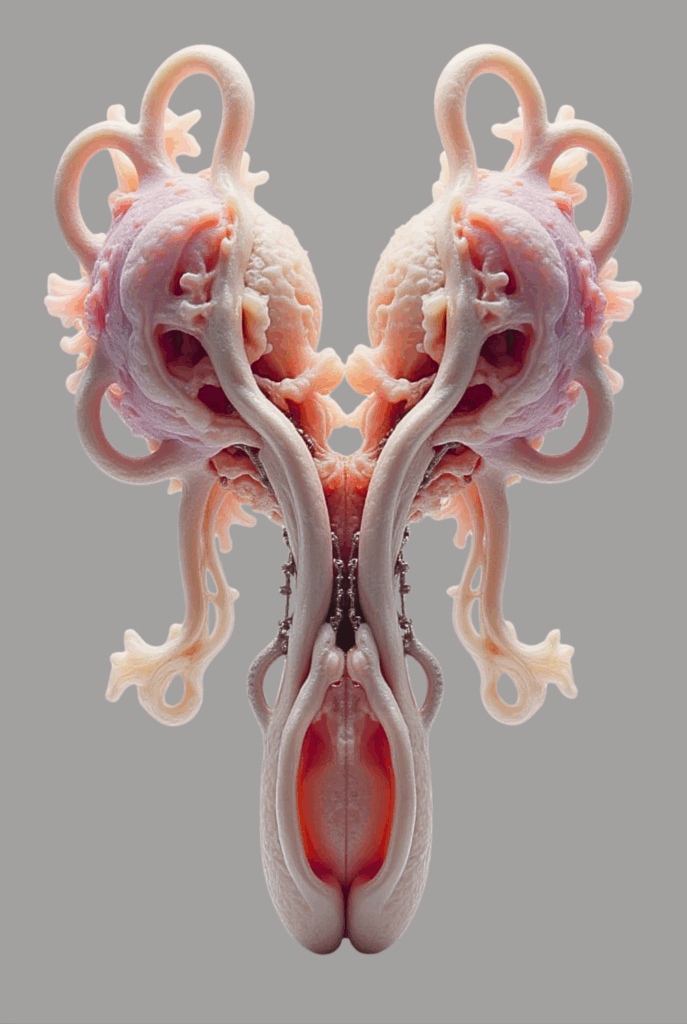
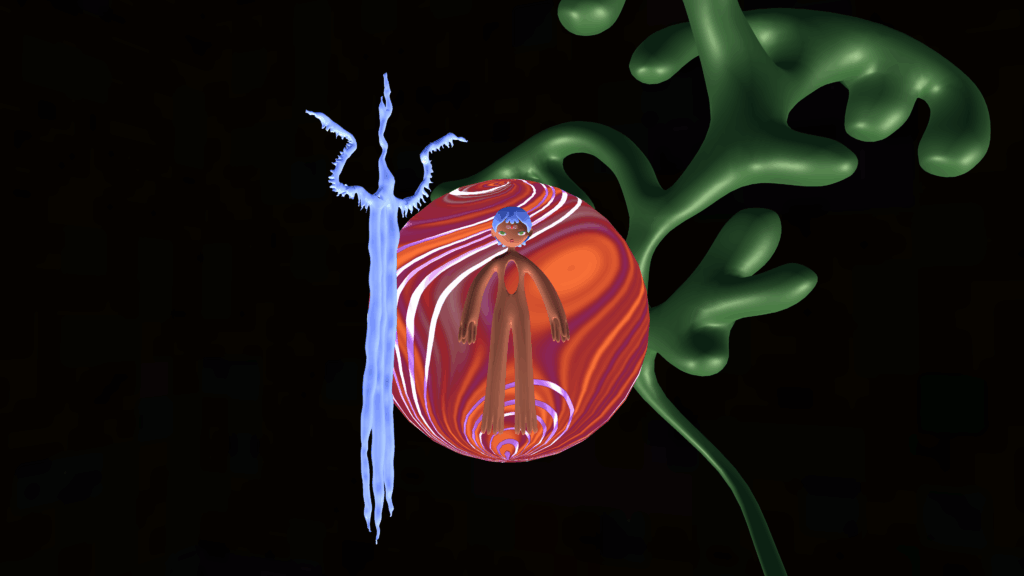
Exquisite Machines for Making Anything But Children, 2025
Digital image series
Integrating cyber-feminism, queer ecology, and crip poetics, Exquisite Machines for Making Anything But Children is a speculative counter-anatomy conceived by Eva Grant for healing following her miscarriage. In a society obsessed with viability, this series cuts the cord between reproduction and utility, repositioning the womb not as a site of extraction, but rather an incubator of autonomy. Midwifing refusal, Exquisite Machines do not produce children; they are a surrogate for futures the world is not yet equipped to carry.
Eva Grant is a St̓át̓imc-Eurasian filmmaker, writer and artist based in BC whose work is grounded in archive, interface, and ecology. She has held fellowships and residencies through the Sundance Institute, imagineNATIVE, Artengine, the Vancouver Queer Film Festival, and the Art Gallery of Ontario. A technological Trickster of the Indigital realm, she prototypes near-worlds, capacious futures, and their imagined implements. She studied philosophy and literature at Stanford University and is the founder of Tooth & Nail Pictures.
CATEGORY: MOVING IMAGE
Alex Gibson
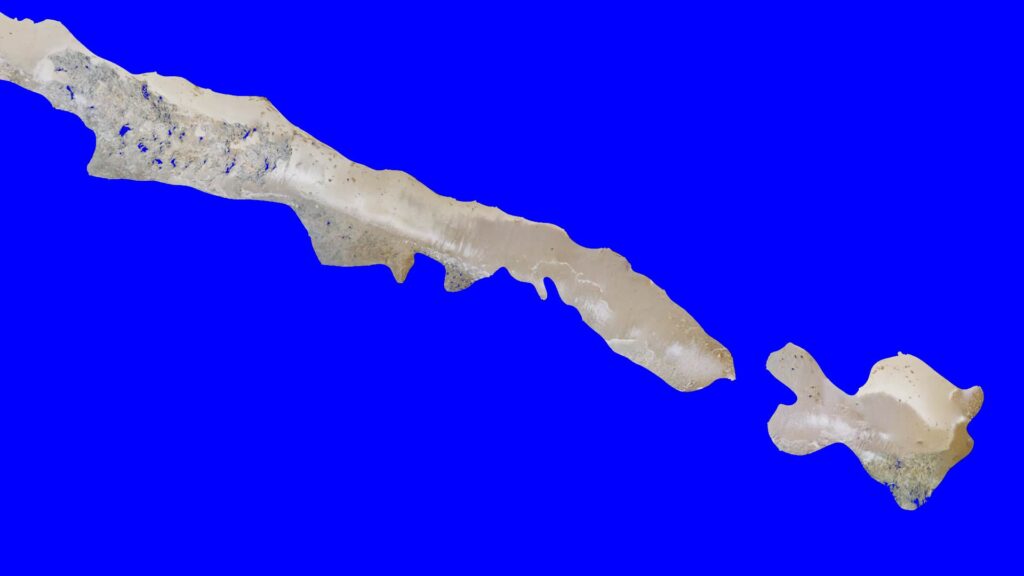
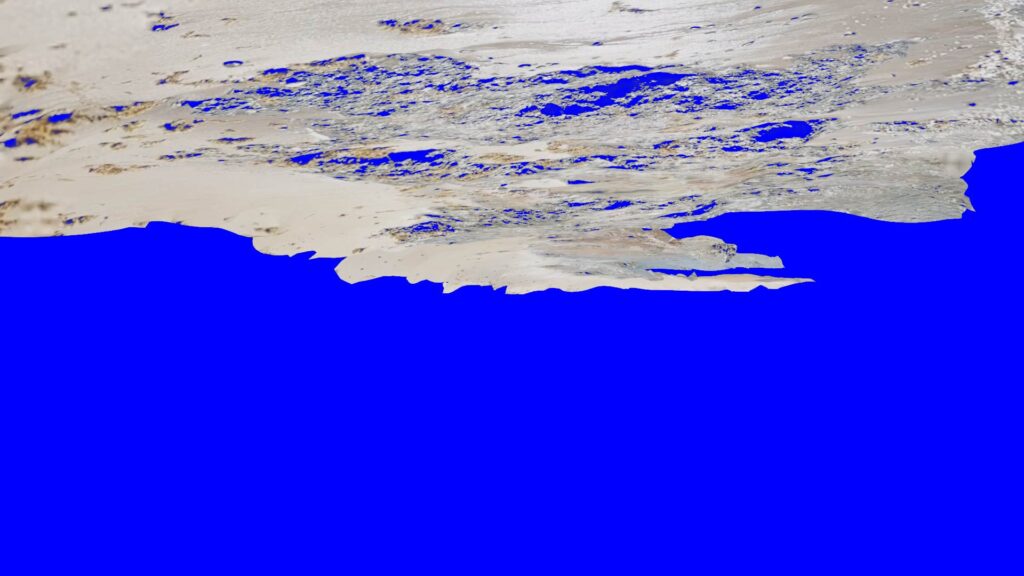
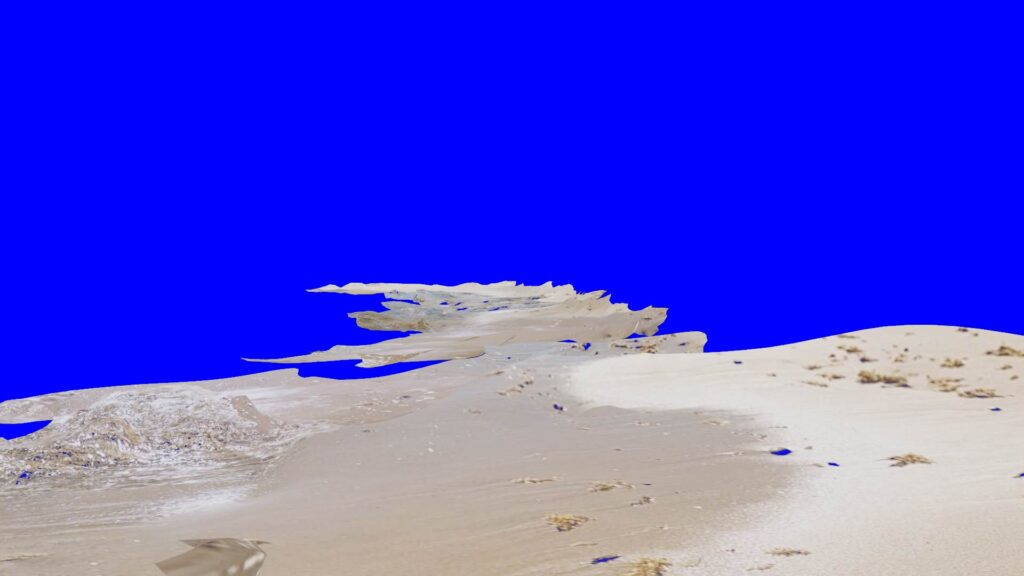
Untitled Passage, 2025
Photogrammetry, animation; 4:41
Untitled Passage is a 3D-scanned, one-kilometer stretch of shoreline from Barbados’ East Coast. This recorded, ephemeral desire path was determined by the ever-moving shoreline where the ocean meets the land, a site that reflects the histories of colonization and (forced) migration between the Caribbean and Europe. With its slow, methodical approach to a geographical survey, the work considers shifting notions of scale and perspective, disorienting conventional bearings, and disrupting colonial cartographies to reimagine Caribbean space beyond imposed narratives.
Alex Gibson is a Barbadian Canadian interdisciplinary artist based on the unceded traditional territories of the Musqueam, Squamish, and Tsleil-Waututh Nations (Vancouver, BC). They use images and archives as sites to examine queer spaces, temporalities, and architectures. Gibson holds an MFA from UBC, and their work has been exhibited in Barbados, Canada, Italy, Poland, and the United States.
CATEGORY: 2D INTERACTIVE
Cadin Londono
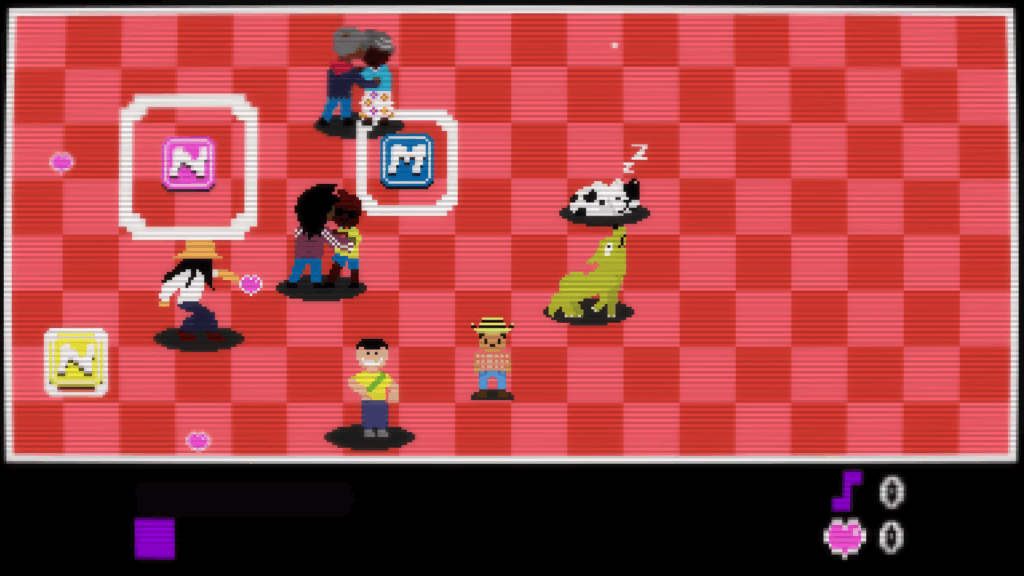
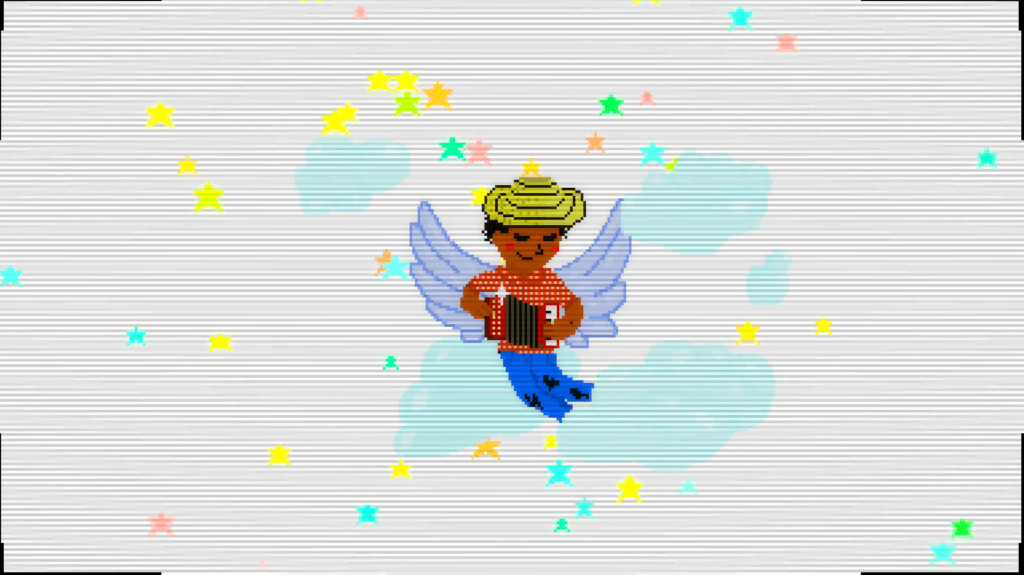
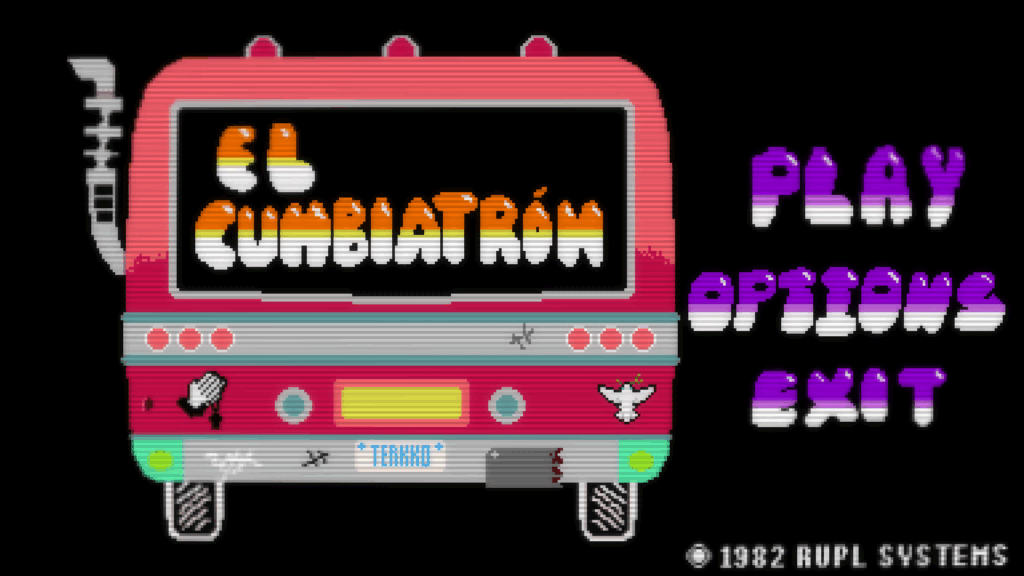
El Cumbiatron, 2025
Game art
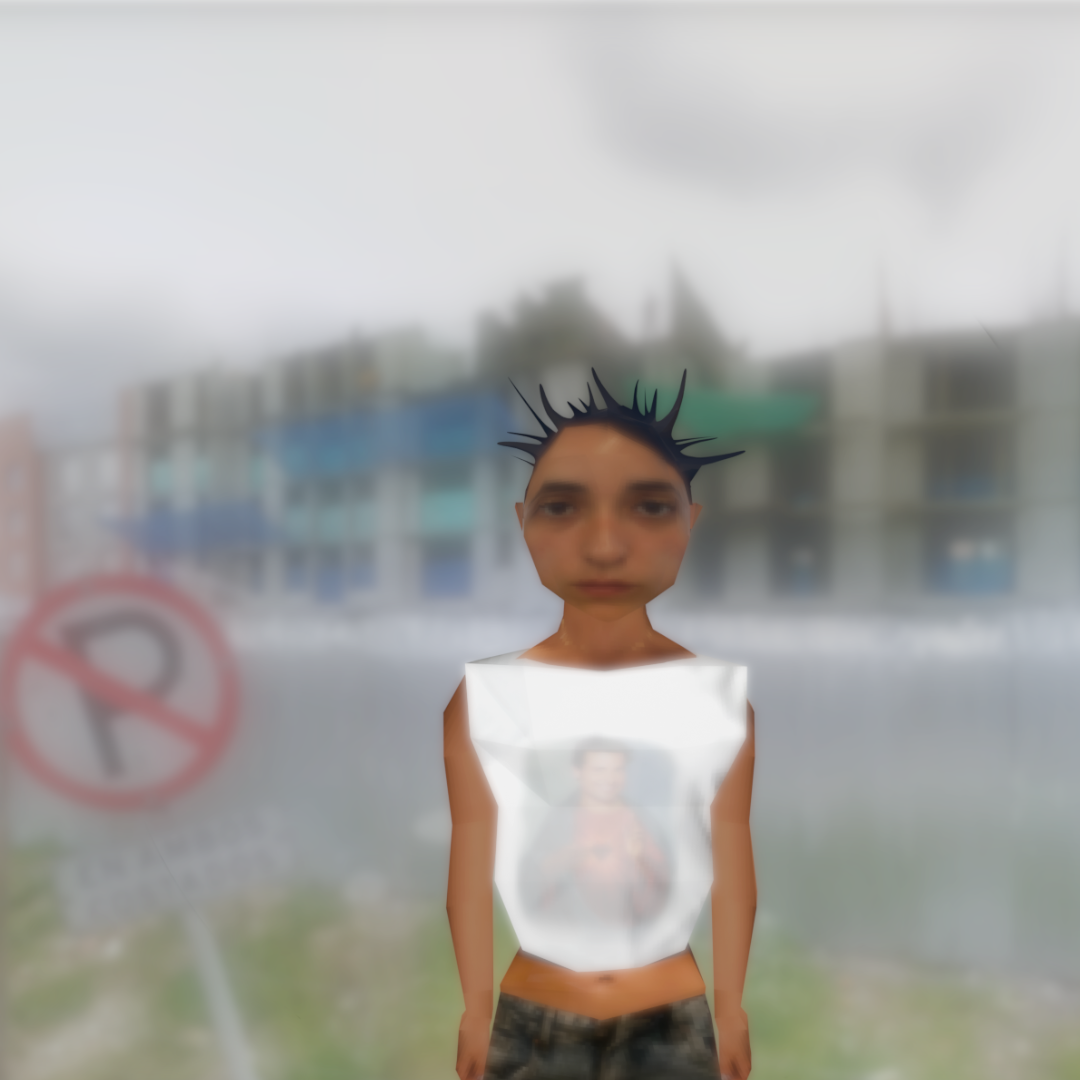
El Cumbiatron is a game that prioritizes experience over achievement. Inspired by the diversity of cumbia music and dancing styles across Latin America, it combines visual and musical expressions to represent the chaotic beauty of a Latinx Club. Designed to push players into a state of constant movement, El Cumbiatron is a digital, intergenerational, cross-continental party for all Latinxs, particularly those who have lost freedom of expression, third spaces, and connection to the motherland.
Cadin Londono is a Colombian game developer born in Medellin, Colombia and based in Tio’Tia:ke (Montreal). His interest in coding began from a young age, watching his father code his own games in his free time. Cadin released his first videogame at age eighteen and is now busy creating videogames that look at life through an anticolonial lens. He holds a BA from McGill University with a major in Computer Science and a minor in Philosophy.
CATEGORY: EXTENDED REALITY
Laura Caraballo
No Me Demoro, 2024
Virtual reality
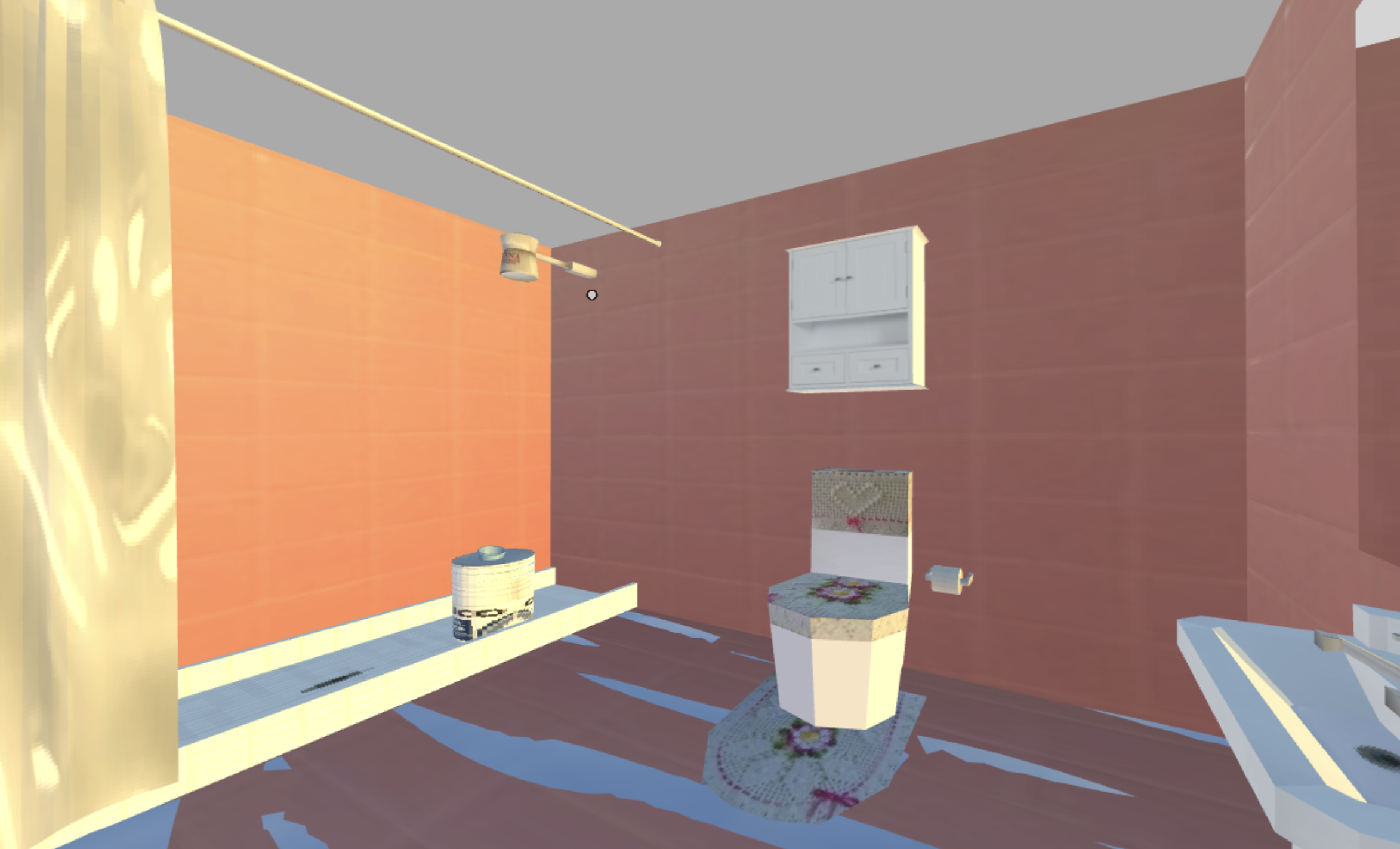
No Me Demoro is an interactive virtual space that encapsulates the experience of growing up in a Colombian household in the 2000s. Through iconic pop cultural objects and sounds of the time, visitors are invited to navigate the two level immersive experience through the perspective of a little girl. Prompted by the nostalgia of the immigrant experience and heightened by the architectural similarities between Bogotá and Montreal, No Me Demoro was born out of yearning for a time and place that cannot be revisited.
Laura Caraballo is an interdisciplinary artist born in Bacatá [Bogotá] and based in Tiohtià:ke [Montréal]. Her work uses technology to reimagine and create interactive, sensorial physical and virtual spaces that revisit the past and question its role in shaping Latinx futurist aesthetics and narratives. Laura is particularly interested in how we shape, and are shaped by, the spaces we inhabit within a temporal context, while exploring themes of home, memory, and consciousness.

CATEGORY: 3D INSTALLATION
Kahani Ploessl
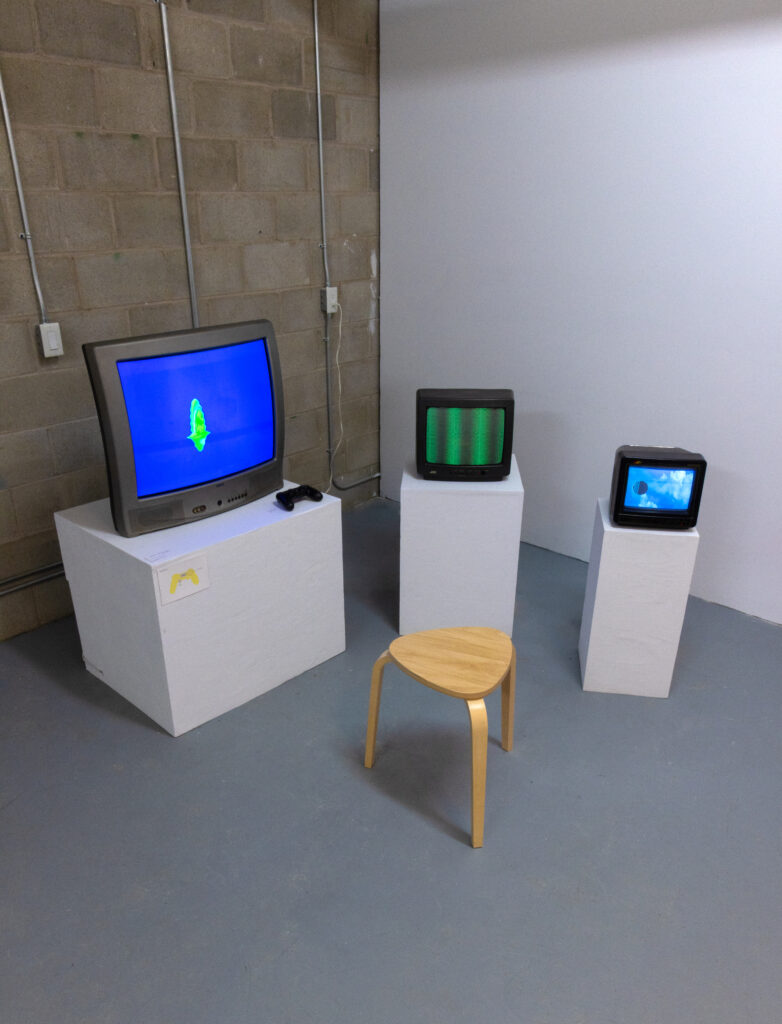
Virtual Shiva, 2025
Multi-channel video game installation
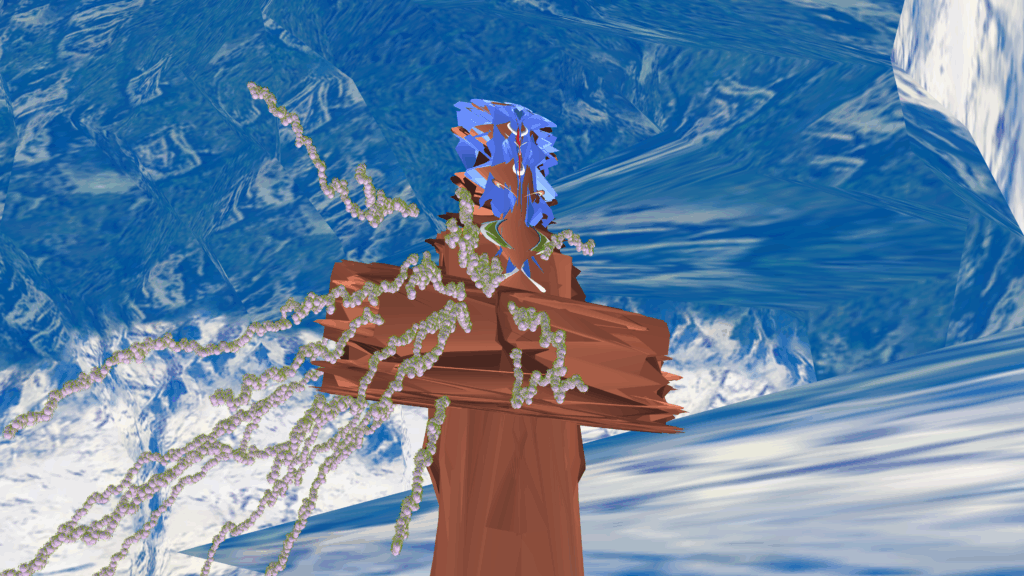
Virtual Shiva is an exploration of the cosmic depth of generative spaces. Drawing from Hindu philosophy while reframing the language of contemporary gaming, the work reclaims and decolonizes the term avatar to take on its original spiritual significance as an avatār of Lord Shiva. As The Destroyer, Shiva embodies not only the force that brings endings, but also the one who clears the way for renewal and transformation. Within this cosmological framework of “technological Hinduism,” glitching is reimagined as a generative act: dissolution as the ground for regeneration.
Kahani (कहानी) Ploessl is a dimension-bending tech artist based in Markham, ON. Her work in generative, videogame, and installation art explores notions of the glitch and digital spiritualism. Guided by her Indian heritage, Kahani draws parallels between the cosmic philosophy of Hinduism and the pixelated manifestations of digital realms and avatar bodies. Her work considers the glitch as a purposeful gesture that can push our digital experiences away from their current structures and functions into experimental and transformative models for being.
Lillian O’Brien Davis
Lillian O’Brien Davis (she/her) is the Associate Curator at the MacKenzie Art Gallery. She previously held the position of Curator of Collections and Contemporary Art Engagement at the Goldfarb Gallery of York University. She has curated independent projects at the Art Museum at the University of Toronto, Susan Hobbs Gallery (Toronto), and School of Art Gallery at the University of Manitoba. Her writing has appeared in BlackFlash Magazine, Peripheral Review, Canadian Art online, C Magazine, and RACAR Art History Journal.
Maxwell Lander
Maxwell Lander (he/they) is an Assistant Professor of New Media at Toronto Metropolitan University. Their work spans many mediums, from games to XR, photography, film and music and is entangled in many conceptual frameworks, the most central of which is queer and trans subjectivities. They have a Masters from OCAD University, where they explored technology’s engagement with the body through custom controller design. They have exhibited games in festivals like Come Up To My Room and Vectorfest, and have released multiple tabletop roleplaying games, most notably one of Gizmodo’s best RPGs of 2022, Himbos of Myth & Mettle.

Rea McNamara
Rea McNamara is a writer and curator based in Tkaronto/Toronto. Her practice explores the participatory cultures of networked counterpublics, particularly media fandoms. Past exhibitions and curatorial projects include I came to ruin you: The Collecting Practices of K-pop Fandoms (co-curated with Bo Shin for York University’s Special Projects Gallery, 2025), Wake Windows: The Witching Hour (MacKenzie Art Gallery, 2024), and dis-ease (Vector Festival, 2021). Additionally, McNamara has written about art and online cultures for Hyperallergic, Border Crossings, Frieze, and more. Currently, she is an SSHRC-funded MA candidate in York University’s Art History and Visual Culture program.

Bomi Yook
Bomi Yook is a media artist based in Calgary working with immersive media, experimental animation, and video performance. Her work explores hybridity in identity, cultural landscapes, and knowledge systems, often drawing on the collective memory of the Korean diaspora and its ties to immigration and colonization. Yook holds an MFA from UCLA and a BFA from Alberta University of the Arts. Her work has shown internationally- including Los Angeles, Seoul, Santa Fe, Greece, Toronto, Montreal, Sackville, Saint John, Moncton, Banff, and Calgary. She received the 2023 Emerging Digital Artist Award and has been supported by the Canada Council for the Arts, Alberta Foundation for the Arts, UCLA, and New Media Caucus.
Adrienne Matheuszik
AdrienneMatheuszikis a mixed Jamaican & settler-canadianinterdisciplinary artist in Toronto. Adrienne has had unsupervised access to the internet since she was nine years old. She uses computers to make art — video, physical computing, creative coding & 3D design — which usually result in interactive installations, augmented and virtual reality, short film and video, and game art. Adrienne’s work explores ideas of representation & identity online and IRL. She is interested in speculative futures and using sci-fi to examine the possibility of the post-colonial.
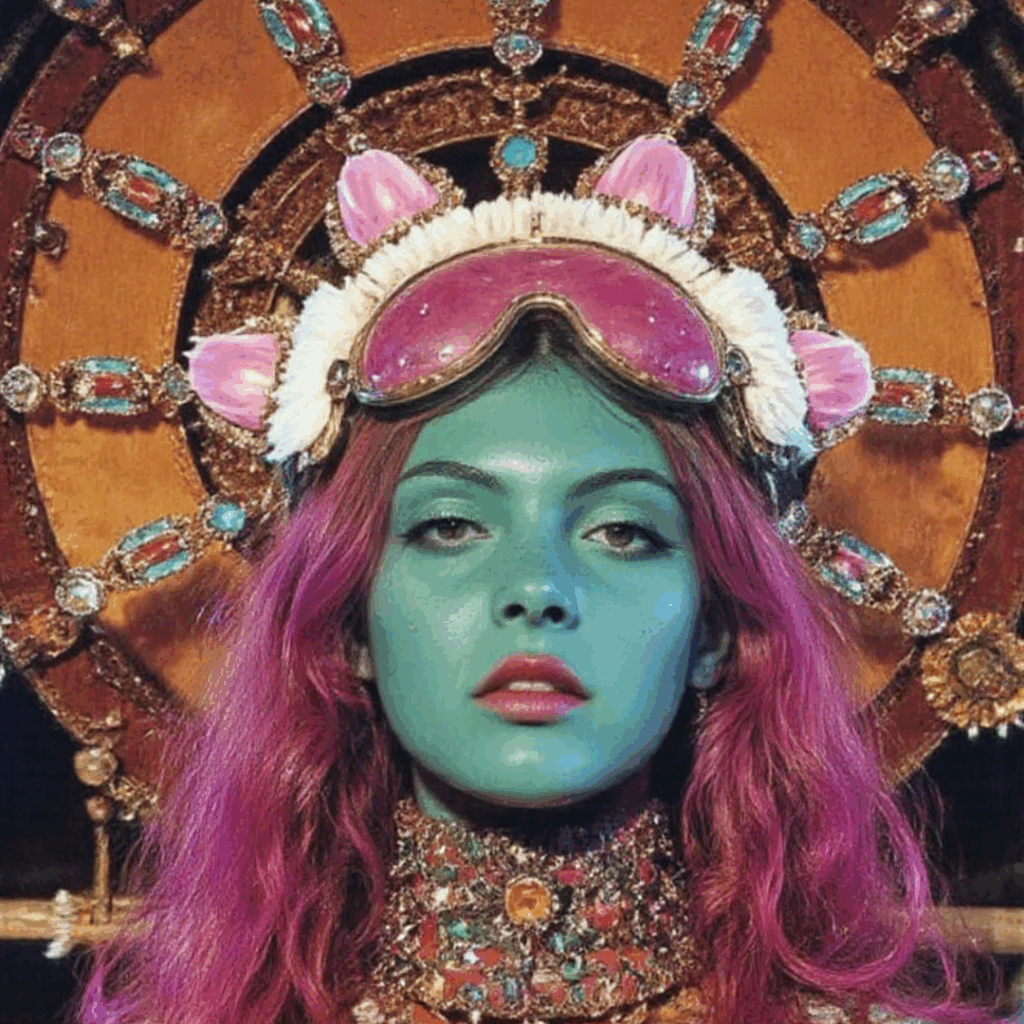
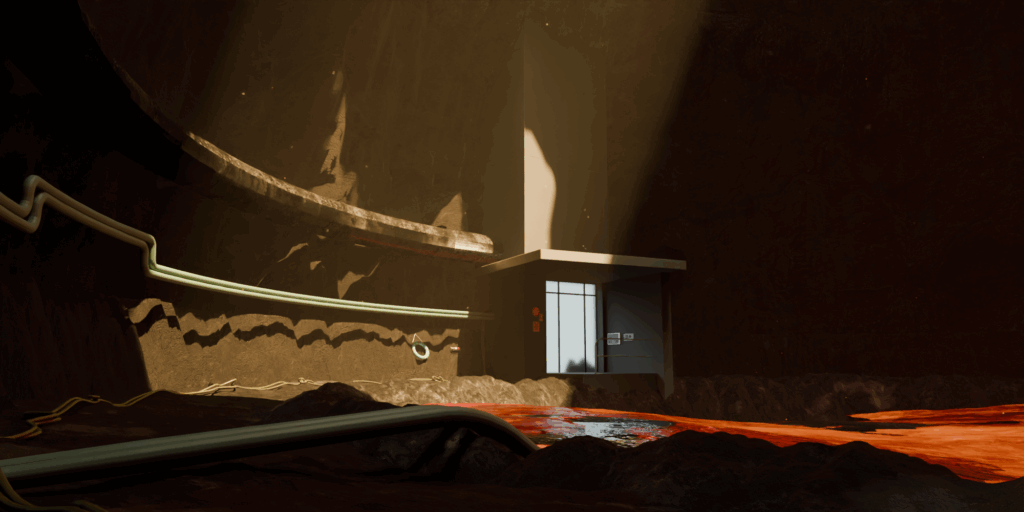
In Adrienne’s 2025 series, Caldera, a geothermal energy plant is retrofitted into an exclusive spa in the base of a volcano. The dangerous environment of a lava pool is surrounded by the signage typical of a swimming pool. A derelict industrial boiler room becomes a sauna with a hot tub. Caldera exposes the extractive processes required to create luxury experiences for tourism and the wellness industry, bringing to the forefront that which is purposely hidden from western society that benefits most from these exploitative systems.